



Lighting Accessories
Kalite Lighting Co, Ltd is a supplier specializing in the production of lighting products. It is mainly engaged in the production and sales of traditional lighting products. Our main products are Indoor Led Light, Outdoor led Light, LED Emergency Products, HID Products Etc.
Professional Team
We have 100 experienced personnel, including highly professional technical and management team of 30 individuals, equipped with internationally accredited equipment makes us offer one stop professional solutions to cater to the most intricate Lighting needs.
Advanced Equipment
We have CNC Press brakes, CNC Punch, CNC shears, CNC grinding, CNC drilling machines, automated painting facilities, Led Photometric machine and so on to ensure high quality products.
Complete Qualifications
With its strong technical strength and sophisticated processing equipment, the company has passed ISO9001 CERTIFICATE, CE MARK, CB CERTIFICATE, SAA CERTIFICATE.
Good Service
Customer service will update you the logistics information of the goods in time to ensure that the goods are delivered in time.




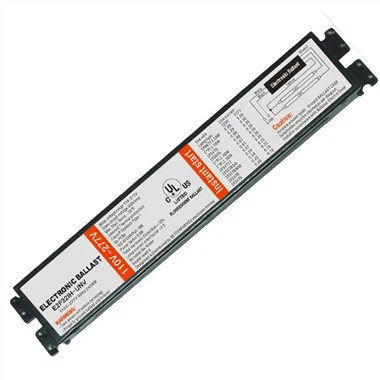
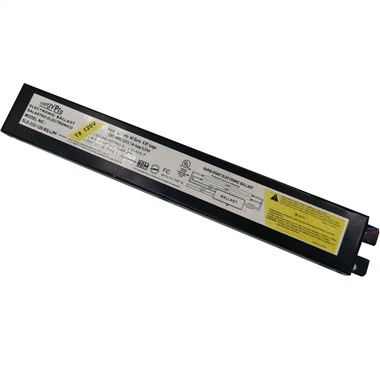


Lighting Accessories offers a wide range of high-quality lighting products and accessories. We pride ourselves on our commitment to providing our customers with affordable and energy-efficient lighting solutions.
Our products are known for their durability, stylish design, and ease of installation. We use only high-quality materials in our products, ensuring long-lasting performance while reducing energy consumption. Additionally, our products are available in a variety of styles and finishes to match any home or office decor.
Ballast
- What is Electronic Ballast?
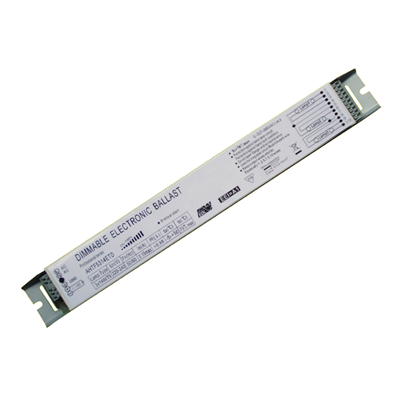
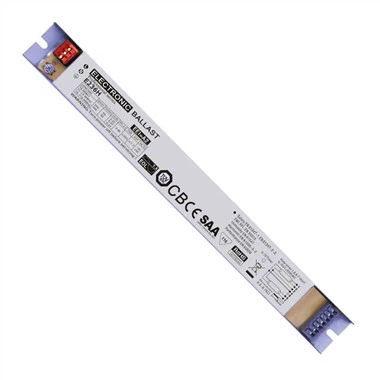
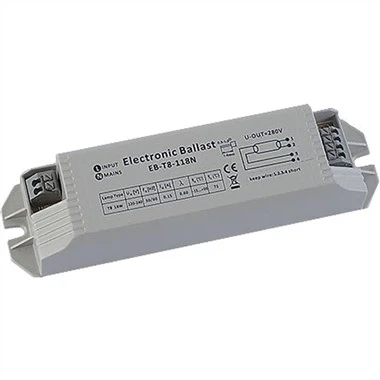
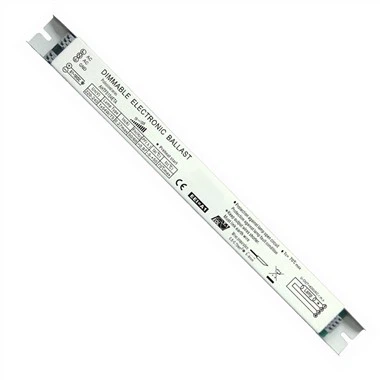
Electronic Ballast is a kind of ballast, which uses electronic technology to drive the electric light source to produce the required lighting. Corresponding to it is the inductive ballast. More and more modern fluorescent lamps use electronic ballasts, which are light and compact, and people can even integrate electronic ballasts with lamps. At the same time, electronic ballasts usually have the function of a starter, so they can save money for a separate starter. Electronic ballasts can also have more functions, such as improving or eliminating the flickering phenomenon of fluorescent lamps by increasing the current frequency or current waveform (such as a square wave). It can also make fluorescent lamps use DC power through the power inversion process.
- Electronic Ballast Advantages
1. Energy-saving. The fluorescent ballast is of the frequency of 20-60khz to supply the lamp tube so that the luminous efficiency of the lamp tube is about 10% higher than that of the power frequency (assume the tube length is 4 feet). Its own power consumption is low so that the total input power of the lamp is reduced by about 20%, which has a better energy-saving effect.
2. Eliminate strobe flash and make light emission more stable. The electronic ballast can improve visual resolution and efficiency. It can also reduce visual fatigue after continuous operation, which can protect our eyesight.
3. The starting point is more reliable. After the starter successfully started after preheated once, avoiding starting several times.
4. High power factor. Fluorescent lamps above 25W that meet the national standards have a power factor higher than 0.95. However, it should be noted that the national standards set a high harmonic limit for lamps below 25W, so that its power factor drops to 0.7-0.8.
5. Stable input power and output luminous flux. High-quality electronic ballasts have good voltage stabilization performance. When the power and voltage deviations are large, the light source can still maintain constant power and stabilize the illuminance, which is conducive to energy saving.
6. Extend lamp life. The constant power of high-quality products, the decrease of lamp current, and the reliable starting point can extend the lamp life.
7. Low noise. The noise of high-quality electronic ballast can reach below 35db, which people can't feel at all.
8. It can be dimmed. For places that need dimming, such as those that originally used incandescent lamps or tungsten halogen lamps for dimming, replace them with high-efficiency fluorescent lamps with dimmable electronic ballasts, which can achieve wide-range dimming from 2% to 100%.
- Electronic Ballast Application
1. Special tows one and tows two electronic ballasts for lightboxes are specially designed for outdoor lightboxes and billboards.
2. Tows one and Tows two ordinary electronic ballasts are suitable for the installation and replacement of lamps in various general lighting occasions;
3. Ring light electronic ballast is specially designed for ring lights. It is suitable for installation in ceiling lamps, such as home balcony lighting, walkway lighting, staircase channel lighting, and other public place lighting.
4. Quartz germicidal lamp ballast is specially designed for 35W-60W low-pressure quartz germicidal lamps. The downlights with it have a long life (4 times that of incandescent lamps), high brightness, constant color temperature, and small size. It can be used for general lighting in shops, display windows, exhibition halls, jewelry stores, bars, museums, specialty stores, etc., or accent lighting in special areas.
Switch
There are several types of light switches that are used to control light fixtures, appliances, and other devices. Most of the common types of switches come in different styles, such as toggle, rocker, slider, or push-button. The style usually does not affect the switch function and electrical wiring, though it can make the selection process confusing.
Led Driver
What Is Led Driver
LED drivers regulate the electricity that power LED lights. They convert alternating current from the main switch to a lower voltage. There are two types in terms of dimming, LED non-dimmable and LED dimmable drivers. The latter type is preferred because the former often overheats within the control circuit, even when it appears it is dimmed correctly.
Additionally, dimmable LED drivers can prolong the life expectancy of LED lights as they lessen the voltage LED lights demand to power up. But not all models are created the same.

What to Check in LED Dimmable Drivers?

Lifetime Rating
Check the lifetime rating of your LED light and driver. Opt for models with a guaranteed 50,000 hours of life expectancy. This is approximately six years of continued use.

Power
Make sure that the dimmable LED driver's power rating is more than or equal to the total wattage of LED lights connected to it.

Dimming Range
Some dimmers go all the way down to zero, while others until 10%. If you need your LED lights to completely go out, choose an LED dimmable driver that can go down to 1%.

Efficiency
Always opt for high-efficiency LED drivers that save on energy.

Water Resistant
If you’re purchasing LED dimmable drivers for the outdoors, make sure they have an IP64 water resistance rating.

Distortion
Choose an LED driver with a total harmonic distortion (THD) of about 20% because it creates less interference with LED lights.
Complete Buyer’s Guide: How Do I Choose an LED Driver for my LED Lights?
Know the Type and Number of LED Lights in the Setup
Identify the type and number of LED lights you need in your installation, as well as how you will arrange them.
You need a constant-current LED driver if your lights are wired in series, like ground and decking lights. You need a constant-voltage LED driver if they'll be wired in parallel, like with LED tape or commercial LED strip lights.
Check the Milliamp Rating of Your LEDs
Ensure that the LED lights' milliamp rating is the same as the LED driver's. Amps and milliamps are the units of measurement for electrical current. While LED lights come in a variety of milliamp ratings, the most popular options are 350mA and 700mA.
Check the Wattage of the LED Driver
Ensure that the LED driver's wattage rating is more than or equal to the total wattage of all lights connected to it. For instance, a driver equipped with five 3-watt outdoor strip lights should have a wattage rating of at least 15 watts.
If you're using an LED tape, multiply the length of the tape by the wattage rating per meter. If the tape is powered at 15 watts per meter and the total length is 3 meters, your LED driver should have at least 45 watts.
Check the Output Voltage of the LED Driver
The LED light's input voltage and the LED driver's output voltage should be compatible. Check these before connecting them to avoid damage.
Driving Methods of LED Driver

There are two common driving methods
(1) A constant voltage source for multiple constant current sources, and each constant current source individually supplies power to each LED. In this way, the combination is flexible, and the failure of one LED will not affect the work of other LEDs, but the cost will be slightly higher.
(2) Direct constant current power supply, with LED in series or parallel. Its advantage is that the cost is a little lower, but the flexibility is poor, and it must solve the problem of a certain LED failure without affecting the operation of other LEDs.
These two forms coexist for a period of time. The power supply mode of multi-channel constant current output will be better in terms of cost and performance, which may become the mainstream direction in the future.


Led Tube
- What is Led Tube?
LED tube lights are long, linear lamps designed to operate in traditional fluorescent fixtures. The most common type of LED tube light is the T8 4-ft LED tube light, designed to replace 4-ft fluorescent lamps.
The most common LED tube light types include:
T8 LED tube (1 inch diameter)
T12 LED tube (1.5 inch diameter)
T5HO LED tube (5/8 inch diameter)
The number after the letter "T" indicates the diameter of the tube, in eighths of an inch. A T8 lamp, therefore, has a diameter of 8 eighths of an inch (8/8 inch), or exactly 1 inch.
Each of these LED tube light types can be found in a variety of lengths, ranging from 1-ft (30 cm) to 8-ft (240 cm).
-
5 Factors You Should Know When You Choose Led Tubes
Dimmability is a feature that allows you to adjust the brightness as needed. Look for a light tube that either comes with a built-in dimmer — or has an external one — so you can control the light to the desired output for your scene. This is particularly helpful if you’re shooting in a location with fluctuating natural light, as you can easily adjust the brightness to match.
Color temperature refers to the warmth or coolness of the light emitted by the tube. Look for a light tube that offers a range of color temperatures to choose from, such as daylight or Tungsten. This allows you to adjust to match the ambient lighting conditions on your set. For example, if you’re shooting a scene in a warm, cozy room, you might choose a tube light with a warm color temperature. Some tube lights also offer full RGB spectrum color palettes.
Some tube lights come with advanced control features that can make them easier to use with your phone or tablet for ultimate flexibility. For example, some tube lights are equipped with Bluetooth connectivity, DMX Control or Sidus Link technology, allowing you to operate the light remotely.
This can be particularly useful in situations where it’s difficult to access the light directly, or where you need to make adjustments to the lighting quickly and easily. Some tube lights also come with on-board controls which allow you to adjust the brightness, color temperature, and power without using a separate controller.
CRI stands for Color Rendering Index. This measures how accurately a light source reproduces colors. Look for a light tube with a high CRI rating, such as 90 or above, to ensure that your colors are accurately represented in your photos or footage. A higher CRI means that the light will reproduce colors more accurately. This is especially important if you’re shooting objects or people where color accuracy is crucial.
CRI stands for Color Rendering Index. This measures how accurately a light source reproduces colors. Look for a light tube with a high CRI rating, such as 90 or above, to ensure that your colors are accurately represented in your photos or footage. A higher CRI means that the light will reproduce colors more accurately. This is especially important if you’re shooting objects or people where color accuracy is crucial.
T8 Tubes and T5 Tubes, How to Choose

01
LED tube lights are usually categorised by various key designations. The most common of these are tube length (this can be stated in either imperial or metric measurements) and bulb or lamp size. Lamp size is typically given as a ‘T’ measurement, with widespread standard sizes including T5, T8 and T12.

02
If you’re wondering exactly what is the difference between T5, T8 and T12 lights, the main point to remember is that the higher the T rating, the thicker a lamp will be in diameter. T equals 1/8 of an inch and the number after the T denotes how many eighths of an inch wide the bulb is - hence T8 is exactly one inch or 8/8ths. You can use this to calculate the diameter of different sized LED tube lights. Therefore, T8 tubes at 1-inch (25.4mm) have a larger diameter than T5 tubes (5/8-inch or 15.9mm), but they are not as wide as T12 (1.5-inches or 38.1mm) lamps.

03
In standard fluorescent tubes, smaller diameters almost always mean better efficiency. A T5 bulb will use less energy to produce the same amount of light as a T8, while a T12 will run at about 45% higher electricity consumption to output the same amount of light as a T5. Being vastly more power-efficient across the board, newer LED equivalents don’t follow quite the same pattern in terms of percentages. However, the basic principle remains similar, even if the ratios between bulb diameter and energy usage stay far closer together as you move up the lamp sizing scale.

04
It's also worth noting that different tube sizes will tend to be associated with different lamp bases or sockets. T8 and T12 tubes are mounted to bi-pin G13 bases as standard, while T5 tubes are normally attached to a bi-pin G5 socket fitting. In simple terms, this is essentially the tube light equivalent of standard bulb cap styles and sizes.
Below are the possible wiring methods for LED tube lights:
Ballast-Compatible
In a "ballast-compatible" wiring configuration, the fluorescent ballast remains connected to the electrical circuit. As long as the LED tube light and fluorescent ballast are compatible, no rewiring work is needed. Simply remove the fluorescent lamps from the fixture, and insert the new LED tube lights.
This configuration is sometimes also called UL Type A or "plug and play" compatible.
Direct-Wire, Single Ended
"Direct-wire" refers to a wiring configuration where line voltage wires are connected directly to the LED tube light. Single ended direct-wire connections feed live and neutral wires to the same set of input pins on a single end of the LED tube light. The opposite end remains unconnected.
This configuration is sometimes also called UL Type B or direct-drive.
Direct-Wire, Double Ended
Some direct-wire LED lamps are designed for double ended connection. These lamps require live and neutral wires to be connected to the opposite ends of the LED tube light. Generally, wires can be connected to one or both pins on each end (shunted lampholders will feed current to both pins).
Our Factory
We have a complete factory production, quality supervision and delivery.

Our Certificate
At present, the company has ISO9001 CERTIFICATE, CE MARK, CB CERTIFICATE, SAA CERTIFICATE.
